Sense-making
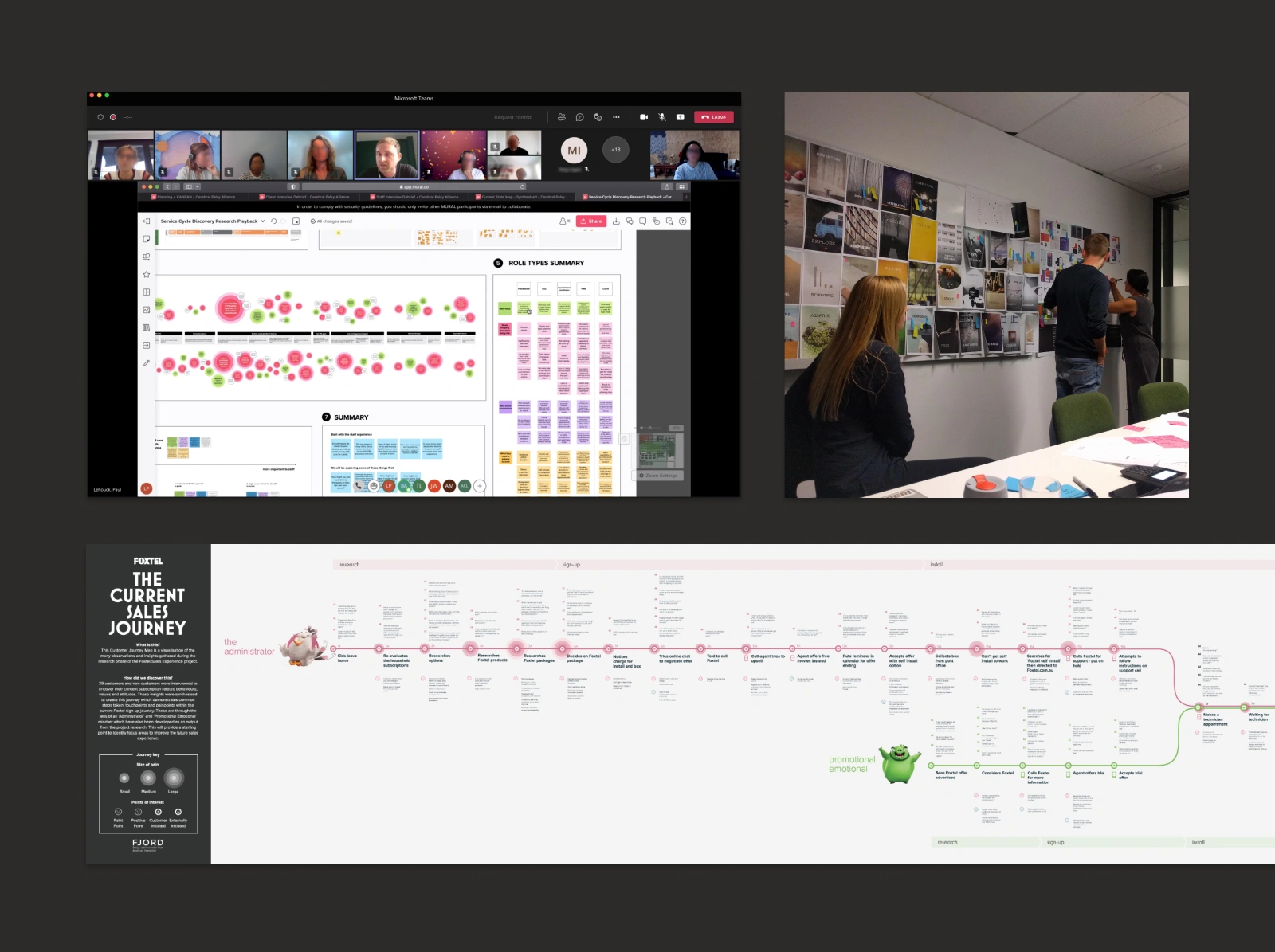
Raw research only becomes useful once it's been made sense of. I work to turn observations, interviews, and data into clear structures, journeys, blueprints, archetypes, opportunity areas, that teams can rally around. This often happens through facilitated, collaborative sessions, because sense-making is stronger when it's shared rather than done alone behind a desk.
Methods
- Research synthesis
- Research playback and next steps
- Ecosystem and stakeholder mapping
- Current and future state journey mapping
- Service blueprints
- Archetypes and mindset development
- Workshop facilitation and co-design
Sense-making is where scattered research starts to look like a story. My approach is to build that story visually, through journey maps, blueprints, and archetypes that lay out not just what people do, but why, and where the gaps and opportunities actually sit. I find this kind of structure is what lets a team move from "interesting findings" to a shared, actionable understanding of the problem. Facilitating workshops together with stakeholders is central to how I like to do this; sense-making that happens in a room with the right people in it sticks far better than a deck that gets emailed around afterward.
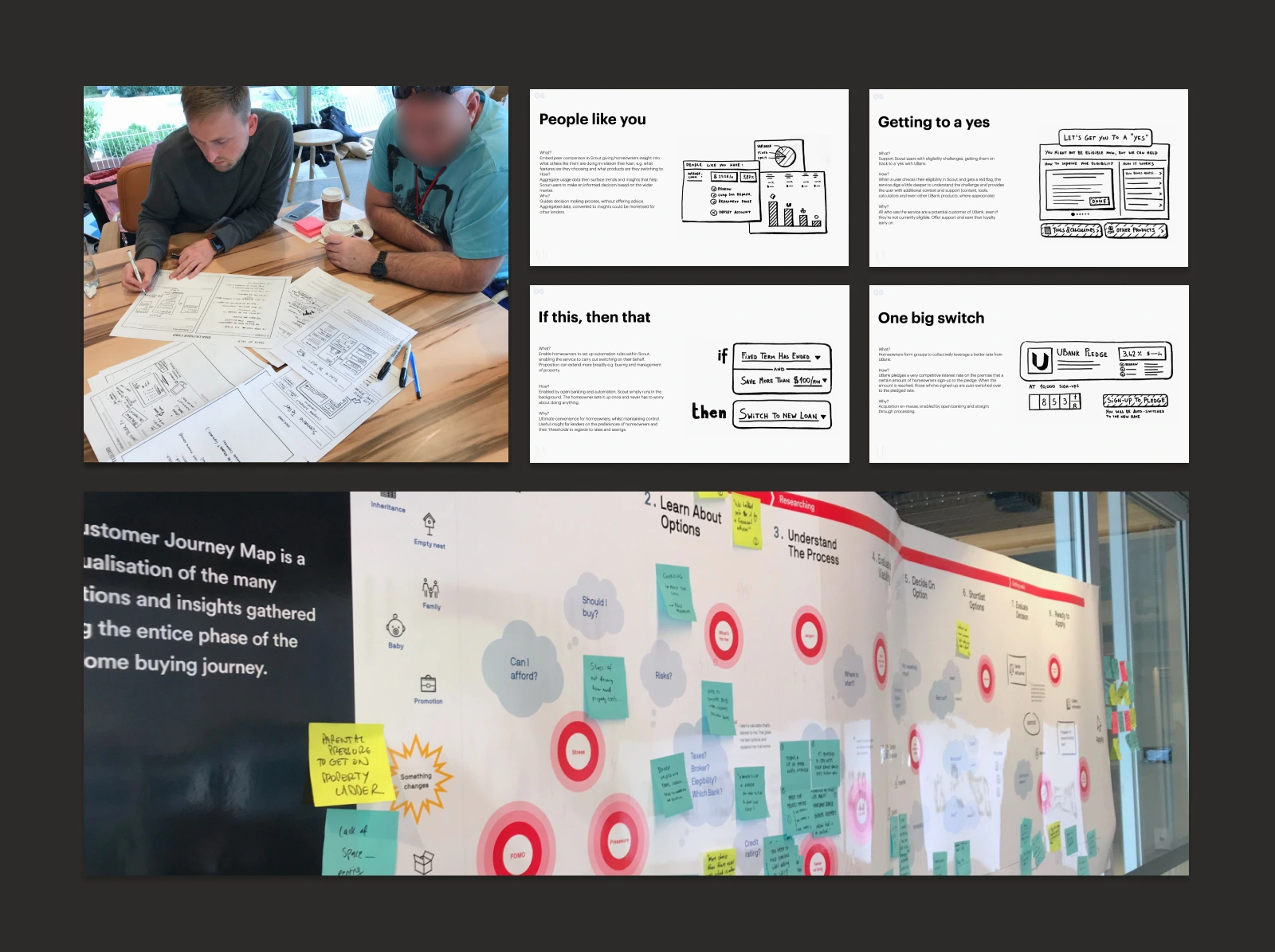
A clear example of this is a project with ubank, where I helped map the opportunities for new digital products within the home-buying journey. Rather than synthesising the research alone, I contributed to a series of ideation workshops the team ran, bringing stakeholders and customers into the same room to work through the journey together and identify where ubank's offering could genuinely help people at points of real friction or uncertainty. The opportunity map that came out of this gave the wider team a shared, prioritised view of where to focus.
This same pattern of synthesising, structuring, and then bringing people in to validate and build on it has shown up across other projects too, from journey mapping and mindset frameworks I developed for financial advisors at Macquarie Bank, to iterative customer-handling work with Worksafe Victoria. The goal is always the same: turn research into something a team can stand behind and act on together.
Continue toStrategy