Discovery
Knowing who you are designing for is the foundation of everything. I use a range of qualitative and quantitative research techniques to build a genuine, nuanced understanding of people's lives, behaviours, and needs. Research isn't a box to check; it's the ongoing practice of staying honest about what users actually experience, so that design decisions are grounded in reality rather than assumption.
Methods
- Desk research and analytics review
- Interviews and focus groups
- Observational studies
- Card sorting and diary studies
- Surveys and quantitative research
- Heuristic evaluation and expert review
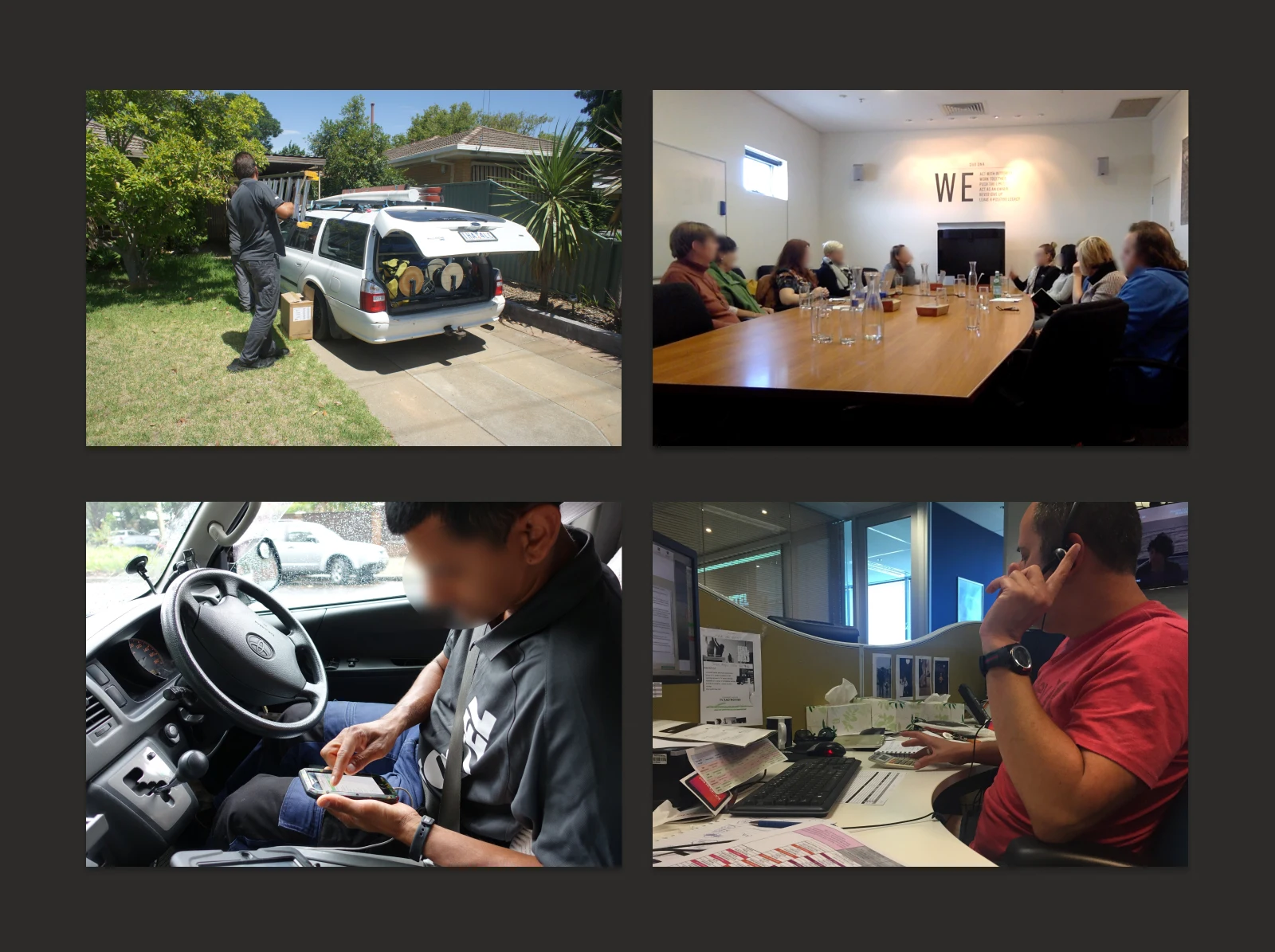
The best research happens when people forget they're being researched. My preference is always for contextual and observational methods, getting out of the lab and into the real environments where people live, work, shop, and make decisions. These settings surface behaviours and tensions that no interview alone would uncover. At Foxtel, this meant shadowing technicians on-site during set-top box installations to see first-hand where the process broke down, paired with call-jacking sessions that let me listen in on real customer support calls as they happened, both giving a far more honest picture of friction than any post-hoc survey could.
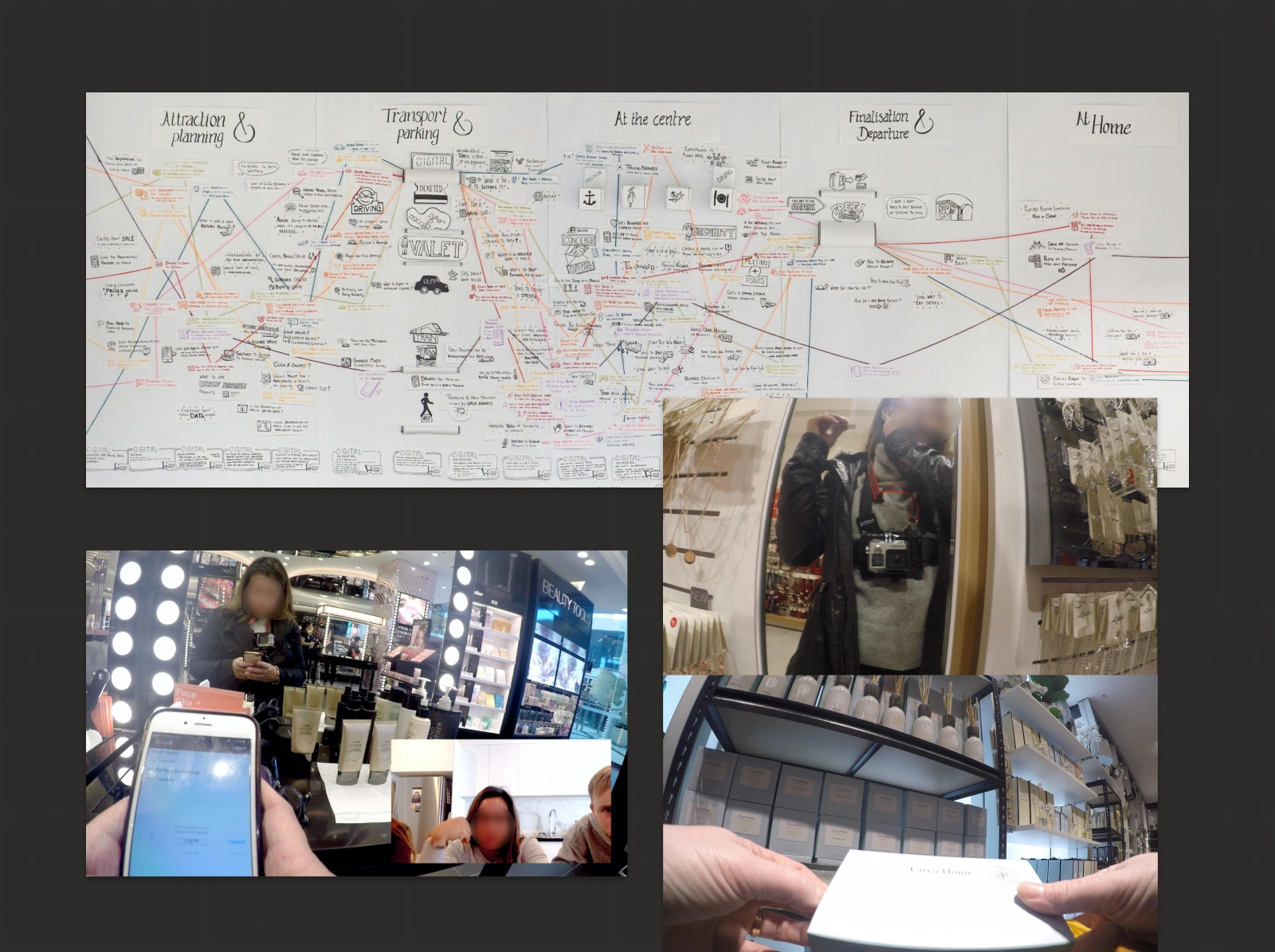
Some of the most valuable work I've done has come from simply being present for longer stretches of time. Shop-alongs for Westfield are a good example: participants wore GoPro cameras and shopped freely through the centre, and I ran a debrief conversation reviewing the footage together with them afterwards. This gave the team genuine insight into in-mall navigation and decision-making, and surfaced novel opportunities that would have been hard to identify doing other research methods.
Research only earns its place if it leads somewhere. I place a high value on bringing stakeholders along through the process, not just presenting findings at the end, but staying close to the synthesis and playback that follows, so the people who'll act on the insights have been part of forming them with me.
Continue toSense-making